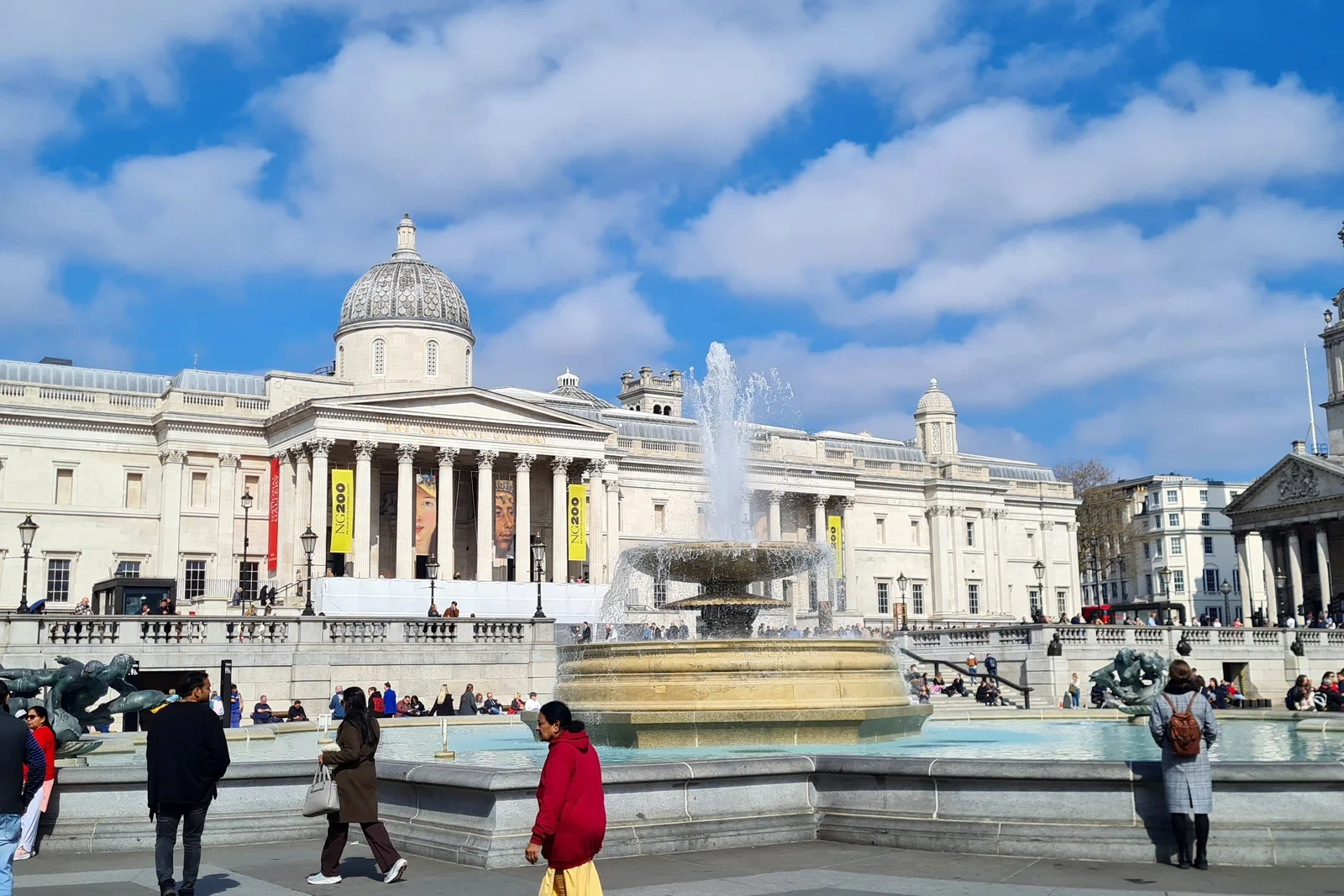
The highlights you came to see
The works are listed in the optimized route order. We recommend following the indicated sequence to minimize walking.
1 · 10 min
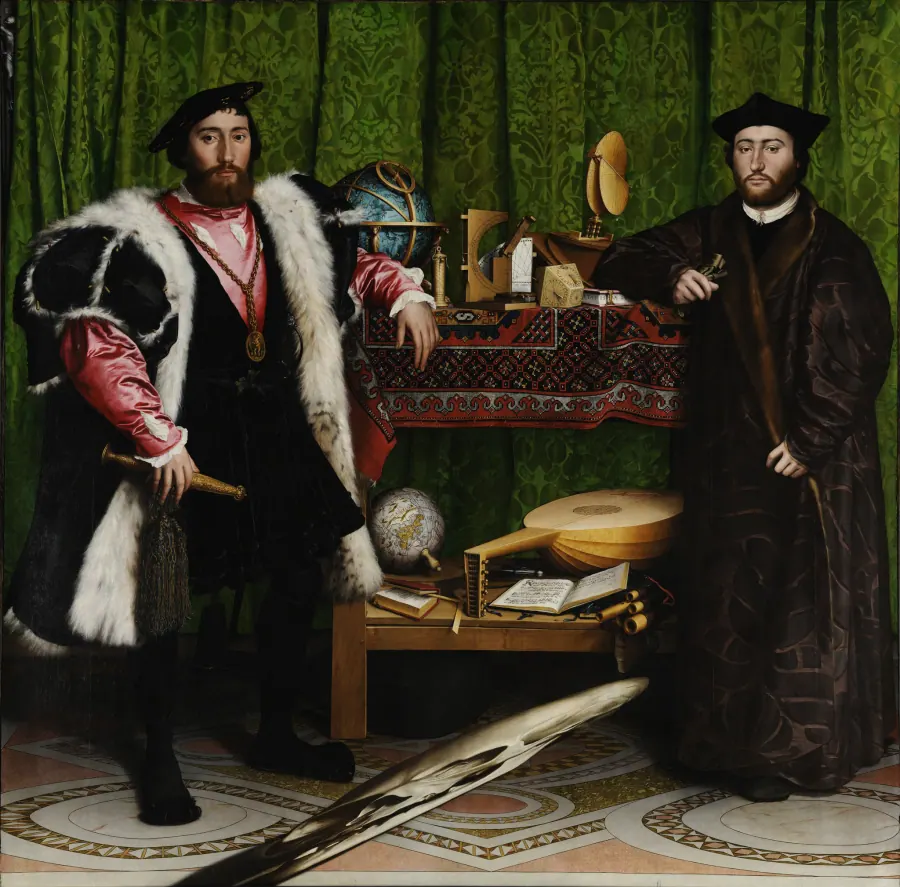
The Ambassadors
Room 4, Level 2, National Gallery
Holbein’s double portrait presents diplomacy, learning and worldly status with extraordinary precision, then disrupts that confidence with an anamorphic skull. The painting makes looking itself a theme: knowledge depends on viewpoint, and even accomplished lives remain subject to death.
2 · 10 min
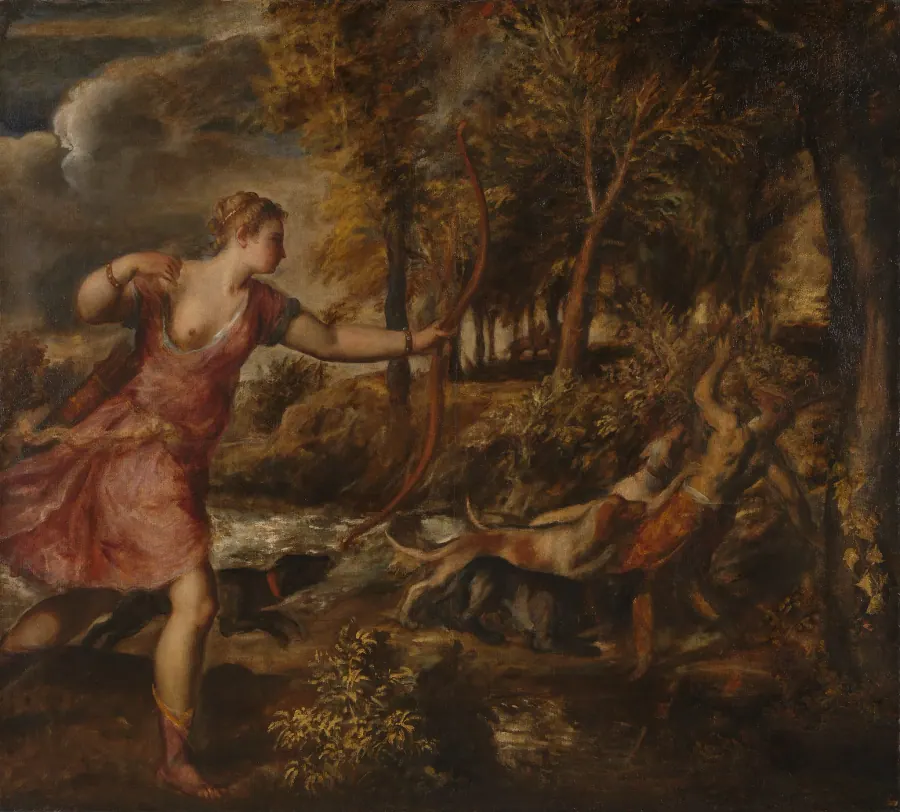
The Death of Actaeon
Room 14, Level 2, National Gallery
This late Titian transforms Ovid’s story into an urgent meditation on pursuit and transformation. Its broken brushwork and unsettled surface reveal how radically the artist’s handling changed near the end of his life.
3 · 10 min
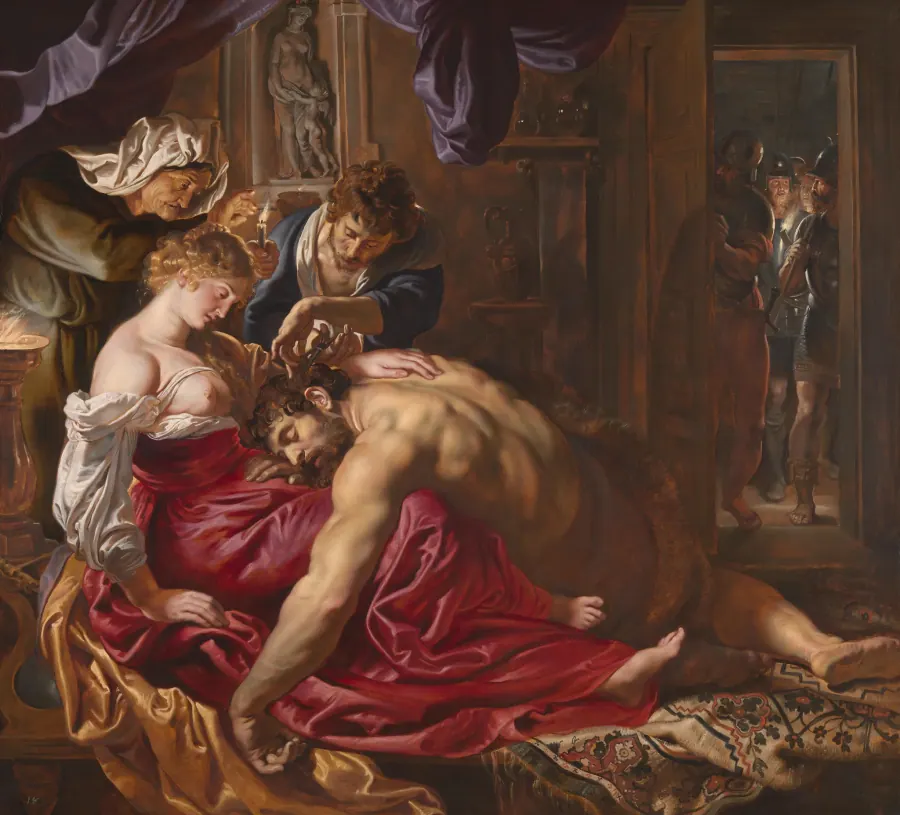
Samson and Delilah
Room 18, Level 2, National Gallery
Rubens turns the biblical betrayal into a scene of suspended tension rather than open violence. Warm candlelight, luxurious surfaces and intertwined bodies preserve the intimacy between Samson and Delilah at the exact moment she makes his capture possible.
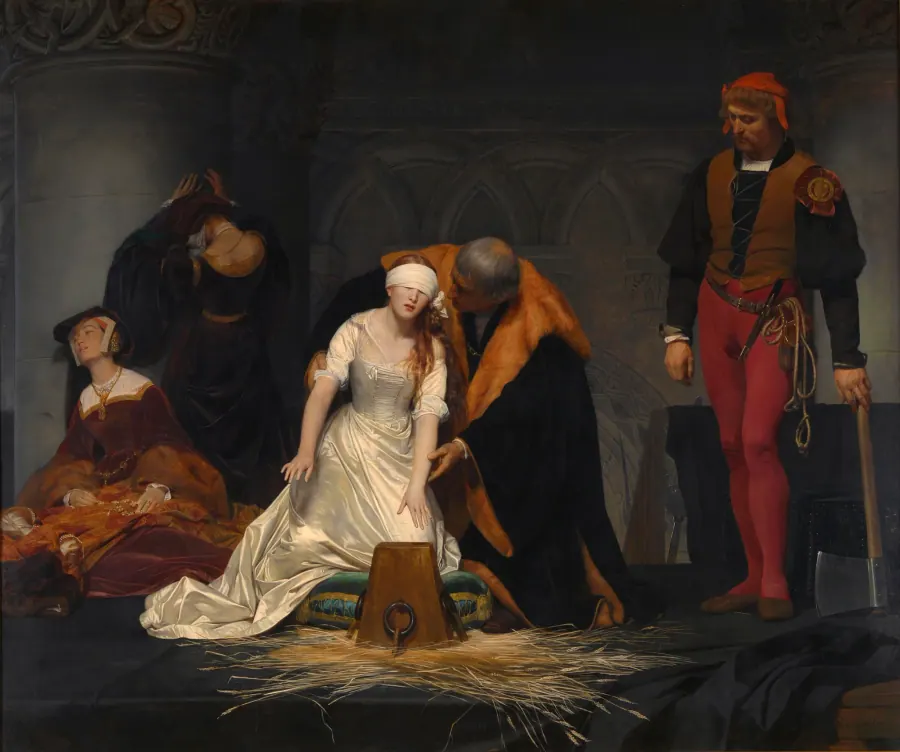
4 · 10 min
The Execution of Lady Jane Grey
Room 38, Level 2, National Gallery
Delaroche transformed the execution of a sixteen-year-old former queen into nineteenth-century historical theatre. Brilliant white satin, tactile straw and carefully staged grief made the painting an immediate Salon sensation, even though its setting and details reshape the Tudor event for emotional effect.
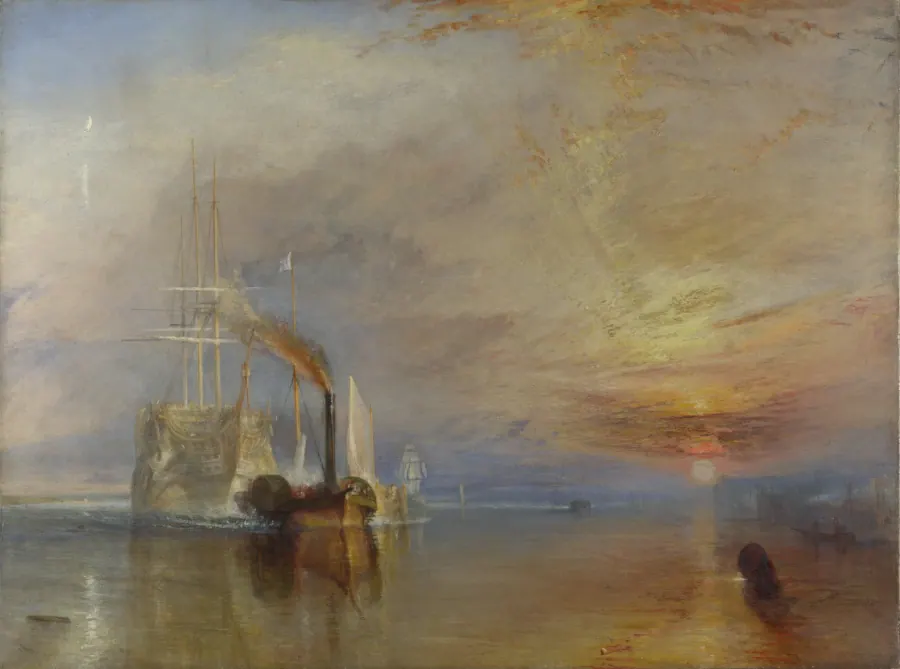
5 · 10 min
The Fighting Temeraire
Room 40, Level 2, National Gallery
Turner makes a warship’s final journey into an elegy for technological and historical change. The pale veteran of Trafalgar is drawn toward destruction by a dark steam tug as sun sets and moon rises, turning an invented scene into a national memory of the age of sail.
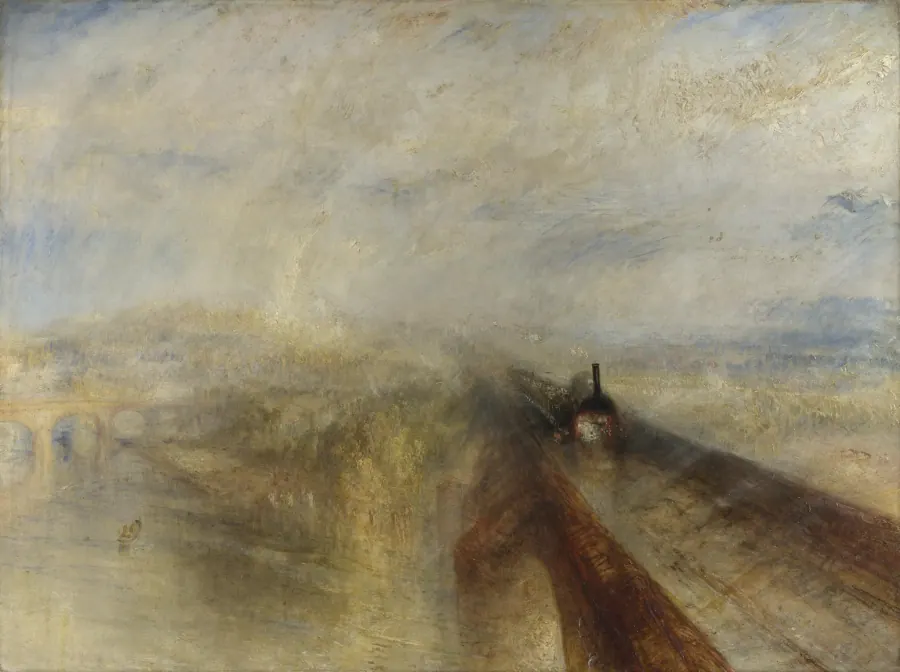
6 · 10 min
Rain, Steam, and Speed – The Great Western Railway
Room 40, Level 2, National Gallery
Turner makes modern technology the centre of a landscape painting without treating it as a simple celebration or rejection. Rain, vapor and speed dissolve the train and bridge into paint, turning a new railway into an experience of unstable vision.
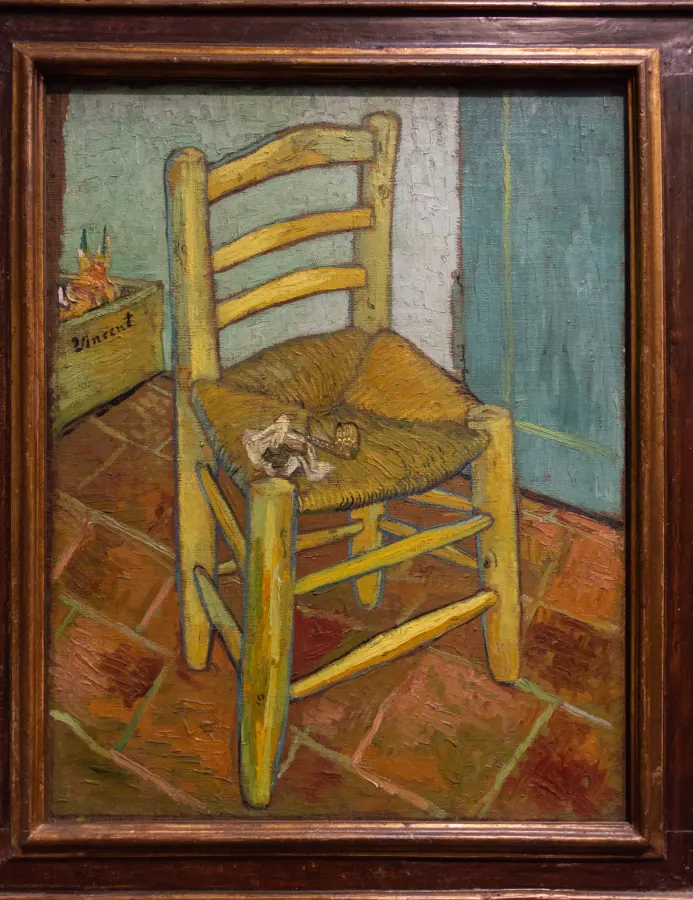
7 · 10 min
Van Gogh’s Chair
Room 43, Level 2, National Gallery
A humble chair becomes a portrait without a figure. Van Gogh uses ordinary objects, assertive colour and tilted perspective to evoke his own presence and to contrast his identity with the more elaborate companion portrait of Gauguin’s chair.
8 · 10 min
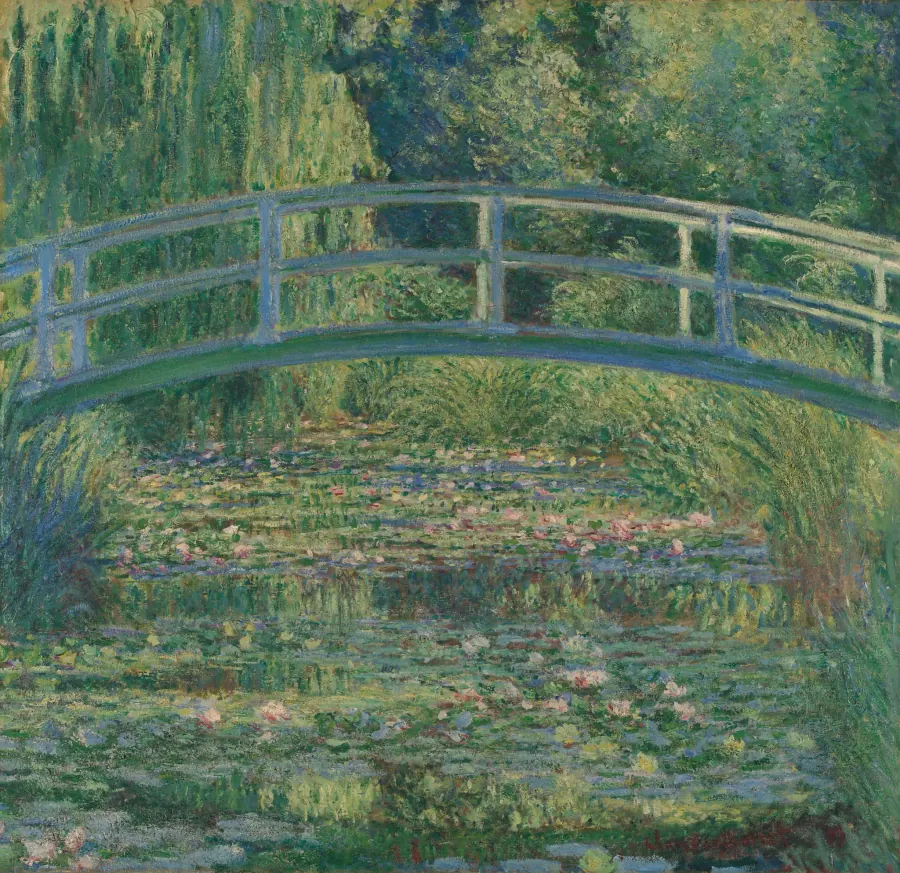
The Water-Lily Pond
Room 46, Level 2, National Gallery
Monet turned a garden he designed at Giverny into a laboratory for serial painting. The Japanese-style bridge supplies a clear arc, but dense vegetation, reflections and floating lilies continually blur the boundary between built structure, cultivated nature and painted surface.
9 · 10 min
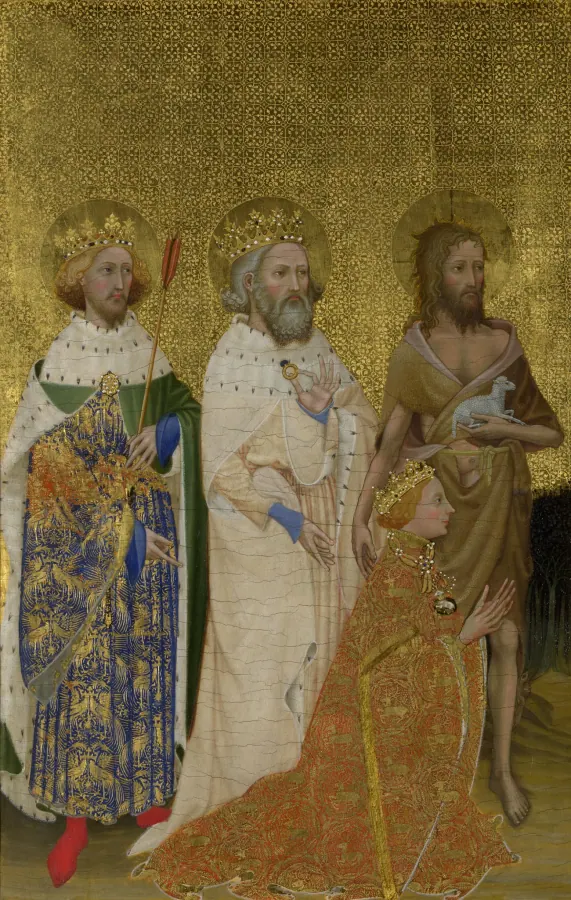
The Wilton Diptych
Room 51, Level 2, National Gallery
This rare portable altarpiece fuses private devotion with royal identity. Richard II kneels before the Virgin and Child while saints present him and angels wear his badge, making sacred vision, dynastic symbolism and the precious craft of medieval court painting inseparable.
10 · 10 min
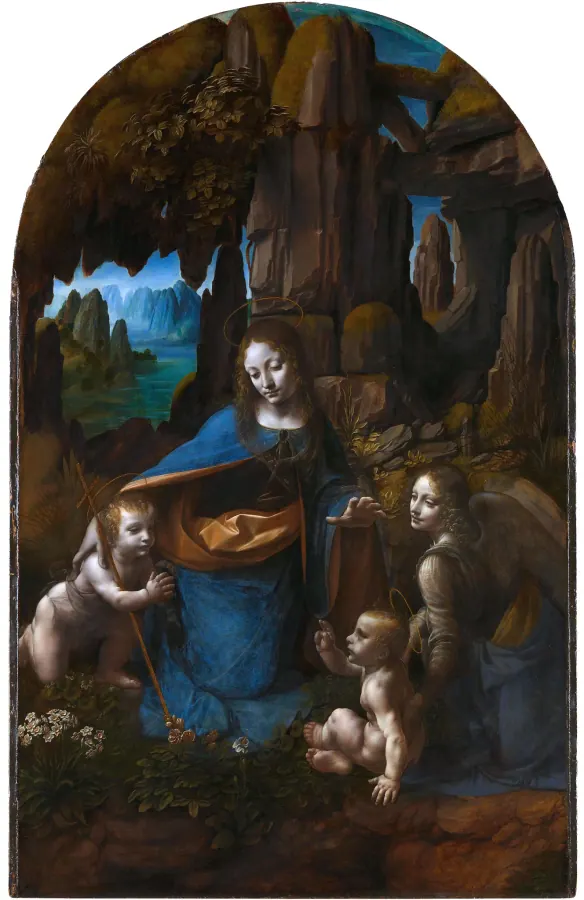
The Virgin of the Rocks
Room 51, Level 2, National Gallery
Leonardo embeds a sacred encounter within a shadowed, geologically strange landscape. Soft transitions rather than hard outlines make figures emerge from darkness, while gesture and gaze organise their silent exchange—an influential demonstration of how light, atmosphere and psychology could unify a painting.
11 · 10 min
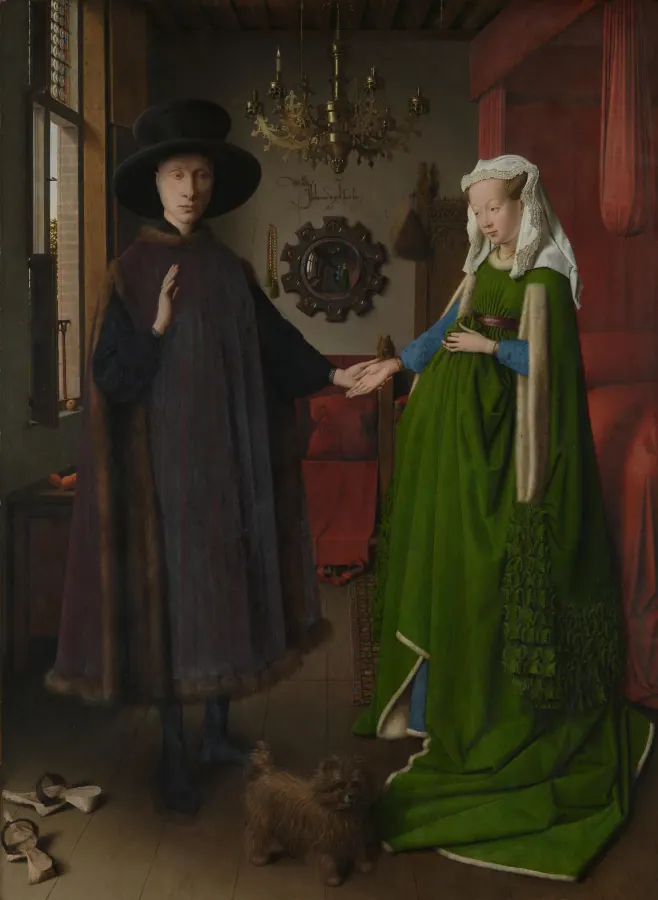
The Arnolfini Portrait
Room 52, Level 2, National Gallery
Van Eyck turns a compact domestic portrait into a demonstration of oil paint’s descriptive power and of identity shaped through objects. Fur, brass, glass, fruit and reflected space advertise wealth, yet the sitters’ exact relationship and the scene’s purpose remain productively uncertain.
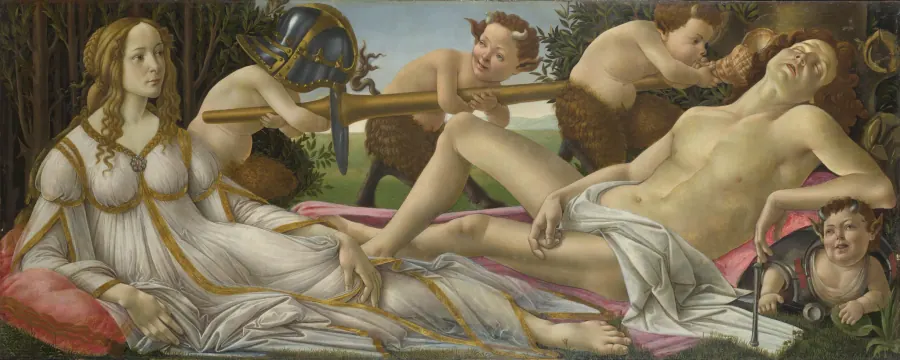
12 · 10 min
Venus and Mars
Room 62, Level 2, National Gallery
Botticelli turns the classical lovers into a witty Renaissance argument that love overcomes war. Alert Venus watches while Mars sleeps through the theft of his weapons, combining elegant mythology, erotic humour and a format probably designed for a Florentine marriage chamber.
2 HOURS · 10 LANGUAGES · OFFLINE
Everything you need for a focused visit
Follow a curated route
Listen to the audio guide
Read descriptions in your language
Audio guide in your language
Works fully offline
Free to use
Available in 10 languages
How it works
- 1Download the guide
- 2Choose your language
- 3Keep track of your progress
- 4Start the 2-hour tour
- 5Follow each stop
- 6Listen and read in your language
NO SIGNAL? NO PROBLEM.
Works completely offline
After purchase, download the audio guide language you need. The route, written descriptions, progress and badges stay available inside the museum.
Frequently asked questions
Is the app free?
Yes. The app is free to download and use for the route and written guide. The audio guide is available as a one-time in-app purchase for 2.99 EUR.
Does it work offline?
Yes. The written guide stays available offline after installation. Audio can be downloaded by language after the 2.99 EUR in-app purchase.
Is it an official museum app?
No. This is an independently created visitor guide and is not affiliated with, endorsed by or sponsored by the museum unless explicitly stated.
How long does the tour take?
The curated route is designed to cover the essential highlights in about two hours, although you can pause or spend longer at any stop.
Do I need internet inside the museum?
No. The content needed for the visit is available offline, so poor reception or unavailable museum Wi-Fi will not interrupt the tour.
Does the app include audio?
Yes. Every stop can include audio. The written guide is free, while audio playback is unlocked with the 2.99 EUR in-app purchase.
Are descriptions and audio available in my language?
Yes. The written descriptions use the language selected in the app. After purchase, you can download the audio guide in any supported language.
Which languages are supported?
The guide supports English, Italian, French, Spanish, German, Portuguese, Dutch, Japanese, Chinese and Korean, including both text and audio.
National Gallery
Ready to see the highlights?
Descriptions and audio guide in your language.